A collection of coincidence: notes from several sources connected by the thread of memory.
“Memory is a motherfucker”
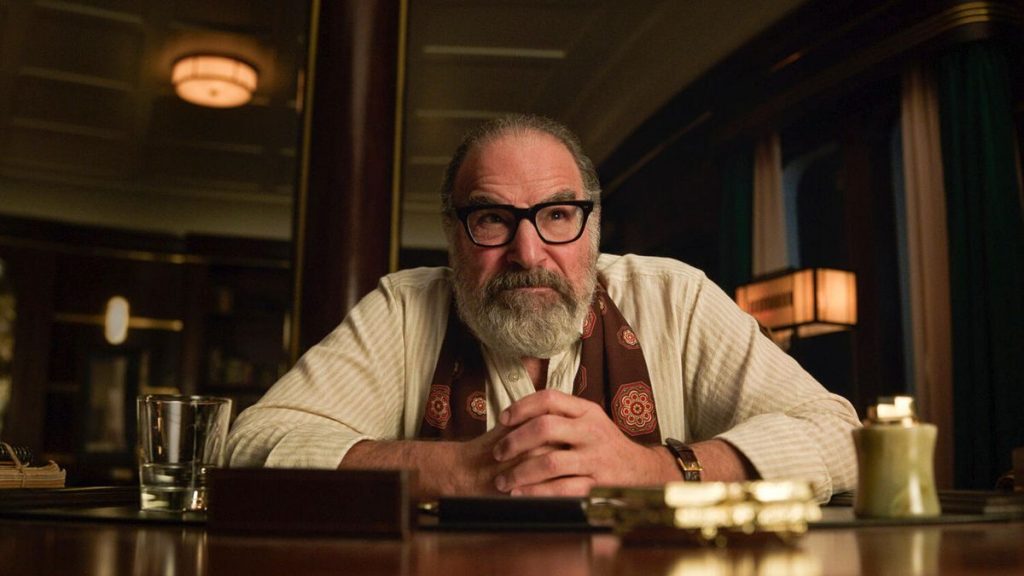
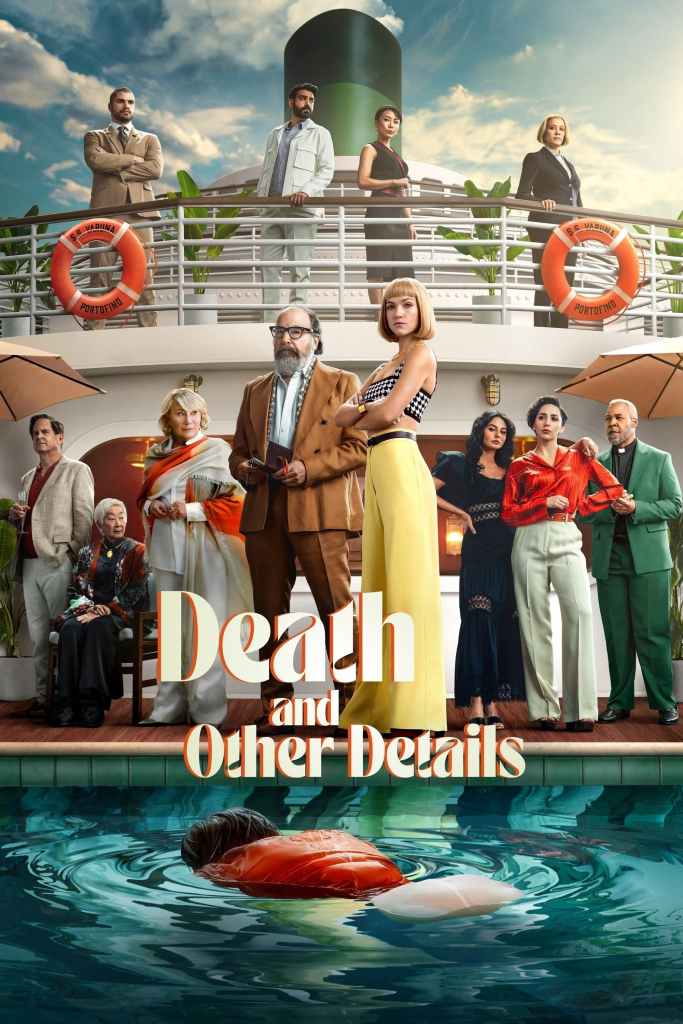
“Memory is a motherfucker,” detective Rufus Cotesworth states in an aggressive and shocking way in episode seven ofDisney’s Death and Other Details.
A locked room mystery set on a Mediterranean ocean liner, Cotesworth is walking Imogene Scott through memories of her mother to recall details of past exchanges with that could prove her innocence.
“Memory amplifies. Memory diminishes. It is malleable,” he says.
How can Imogene ever hope to recall the real events on the day she last saw her mother?
Detective Rufus Cotesworth in Death and Other Details / Disney+Series poster for Disney’s Death and Other Details / Disney+
“Reality is a slippery concept”
At the same time, I’ve been reading Martin Gayford’s Modernists and Mavericks looking at the ideas of artists working in London from the 1940s to the 1970s who were all trying to answer the question ‘What is painting?’ Interviews with artists like Francis Bacon, Lucian Freud, Frank Auerbach, David Hockney, and Bridget Riley explore how paint and the act of painting could do fresh things, and be quite different to photography.
In Chapter 4, David Hockney:
“Reality is a slippery concept, because it is not separate from us. Reality is in our minds.”
And even for people have been there, the past is a place that needs to constantly be recreated and re-examined.
Talking about the late 1940s some sixty years later, Frank Auerbach - one of the principal witnesses who have contributed to this text - remarked: I'm speaking here for a young man who no longer exists and of whom I'm a rather distant representative.'

Something of the sort is true of all of us when we reach far back in time.
“Reality is a slippery concept, because it is not separate from us. Reality is in our minds.”
David Hockney, 2016
“I’m speaking here for a young man who no longer exists and of whom I’m a rather distant representative.”
Frank Auerbach
Preserving memory
If our personal recollections can be so fluid and changeable, is it possible that photographs, videos, diaries, notes can serve as a substitute for memory, to preserve them for others to know?
It’s something I think about often. With so many photos and videos in digital format stored across different devices and cloud services, when and how many of them should be converted into more long lasting forms? When might they just disappear? Who would notice and would it matter?
Physical preservation might help in some part, but what about the interpretation when looking back. Does it make memory any better? I’ve already seen amongst family and friends, the frozen moments of time in photos and videos supplanting real memory of an actual event. The experience is converted into a staccato sequence of activities, stripped of the dynamic of the moment, converging to a single point of view.
Archivists also recognize the dynamic nature of history and memory.

While archival materials provide snapshots of the past, they are not static. Discoveries, reinterpretations, and historical contexts lead to fresh perspectives on the past.

Archivists facilitate research and reexamining historical materials, contributing to the ongoing dialogue between history and memory.

Historical records are an evolving narrative in the rich tapestry of human experiences, and archival materials are the threads that weave it together.

At the collective level, archival materials serve as the repository of societal memory.
Is a photo even a photo anymore?
So even if we submit photos to printers and bind them in books, how much can we rely on them? The continuous speedrunning rollout of AI offers more and more ways to alter photos and generate images that challenge then traditional role of the photo as a reliable documentary record of a place and time in history.
Sure, the discussion of how true a photo is to the moment when the shutter was pressed has been under debate for some time.
At The Verge, Nilay Patel has been tracking how AI tools can totally redefine how images are made at every step of the photography process, from composition to capture to editing. He looks at what big tech thinks a photo is. Take your pick, or forge your own path.
Actually, there is no such thing as a real picture. As soon as you have sensors to capture something, you reproduce [what you’re seeing], and it doesn’t mean anything. There is no real picture. You can try to define a real picture by saying, ‘I took that picture’, but if you used AI to optimize the zoom, the autofocus, the scene — is it real? Or is it all filters? There is no real picture, full stop.
Patrick Chomet, Samsung EVP of customer experience
“It’s about what you’re remembering,” he says. “When you define a memory as that there is a fallibility to it: You could have a true and perfect representation of a moment that felt completely fake and completely wrong. What some of these edits do is help you create the moment that is the way you remember it, that’s authentic to your memory and to the greater context, but maybe isn’t authentic to a particular millisecond.”
Isaac Reynolds, Google product manager for the Pixel Camera
Here’s our view of what a photograph is. The way we like to think of it is that it’s a personal celebration of something that really, actually happened.
Whether that’s a simple thing like a fancy cup of coffee that’s got some cool design on it, all the way through to my kid’s first steps, or my parents’ last breath, It’s something that really happened. It’s something that is a marker in my life, and it’s something that deserves to be celebrated.
Jon McCormack, Apple VP of camera software engineering
Memory, Mind & Media
The impact of media and technology on human, social and cultural remembering and forgetting has blurred the line between real and fake imagery.
So much so there’s a relatively new academic journalMemory, Mind & Media that confronts the dilemma head on.
In that journal, Andrew Hoskins at the University of Glasgow writes:
I argue here for a ‘third way of memory’, to recognise how the entanglements between humans and machines both enable and endanger human agency in the making and the remixing of individual and collective memory.

This includes the growth of AI agents, with increasing autonomy and infinite potential to make, remake, and repurpose individual and collective pasts, beyond human consent and control.

This paper outlines two key developments of generative AI-driven services: firstly, they untether the human past from the present, producing a past that was never actually remembered in the first place; and, secondly, they usher in a new ‘conversational’ past through the dialogical construction of memory in the present.

Ultimately, developments in generative AI are making it more difficult for us to recognise the human influence on, and pathways from, the past, and that human agency over remembering and forgetting is increasingly challenged
Generative AI-driven services untether the human past from the present, producing a past that was never actually remembered in the first place
 Martyn James Bull
Leave a comment